
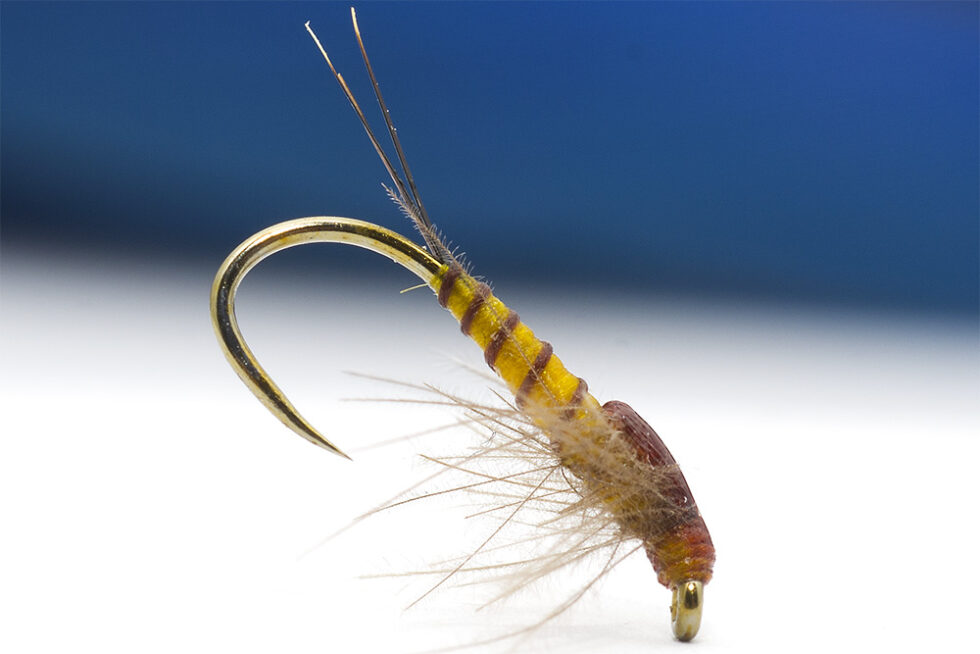
When I’m fishing pressured rivers and the trout have seen everything, I want a nymph that looks normal, behaves naturally, and doesn’t scream “artificial.” That’s exactly where my Yellow Swimming Baetis Nymph works—especially when I’m fishing nymphe à vue (sight nymphing).
This pattern is built around subtle realism: a slim, clean silhouette, a translucent yellow body, and CDC legs that move with almost no effort. In clear, technical water, this combination often makes the difference between a refusal and a confident take.
Why this nymph works so well on selective trout
1) The color is “visible without being too artificial.”
That soft yellow body stands out just enough for you (and the fish), without triggering that “danger” reaction cautious trout get in crystal-clear water.
2) Clean silhouette = realism.
I purposely avoid fuzzy dubbing for the body. On small Baetis-style nymphs, too much fuzz quickly turns into a bulky shape that doesn’t match the real insect.
3) CDC legs add life without adding bulk.
CDC in a dubbing loop (or split thread) creates a delicate leg profile and subtle movement—perfect when you pulse the fly gently in front of a feeding fish.
My tying philosophy for pressured-water nymphs
With picky trout, I care less about “flashy triggers” and more about control:
- Tight body
- Defined segmentation
- Slim thorax
- Natural leg motion
That’s why I tie the body, thorax, and even the back of the thorax with thread. Thread is one of my favorite materials for small nymphs because it becomes slightly translucent when wet, which mimics the natural look of real insect bodies.
But to do this properly, you need a thread that behaves well
Thread choice: the small detail that matters
For this fly, I strongly prefer a high-quality thread like Champion Micro Split Thread:
- It lays flat (so you can build a smooth body without lumps)
- It works beautifully in split thread or a dubbing loop
- It gives that subtle wet translucency that makes the fly look “alive” in the water
If your thread is wiry, too thick, or doesn’t split cleanly, the entire concept of this pattern becomes harder to execute—especially in sizes #16–#20.
Fly recipe (simple and minimal)
Hook: #16, #18, or #20 (nymph hook)
Thread (body + thorax): Yellow thread (high quality recommended)
Rib (optional): dark body thread (for segmentation and durability)
Legs: CDC (in dubbing loop or split thread)
Finish: Small, neat head (thread)
Optional weight: Add weight ( tungsten wire) only if your water demands it (small bead or underbody wraps). For sight nymphing, I often prefer the lightest version that still reaches the fish comfortably.
Leave a Reply