
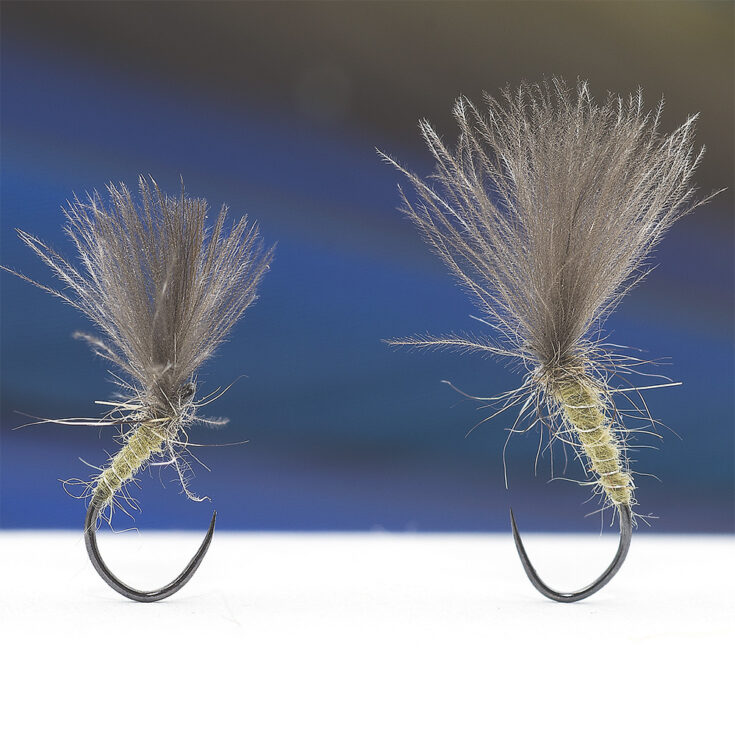
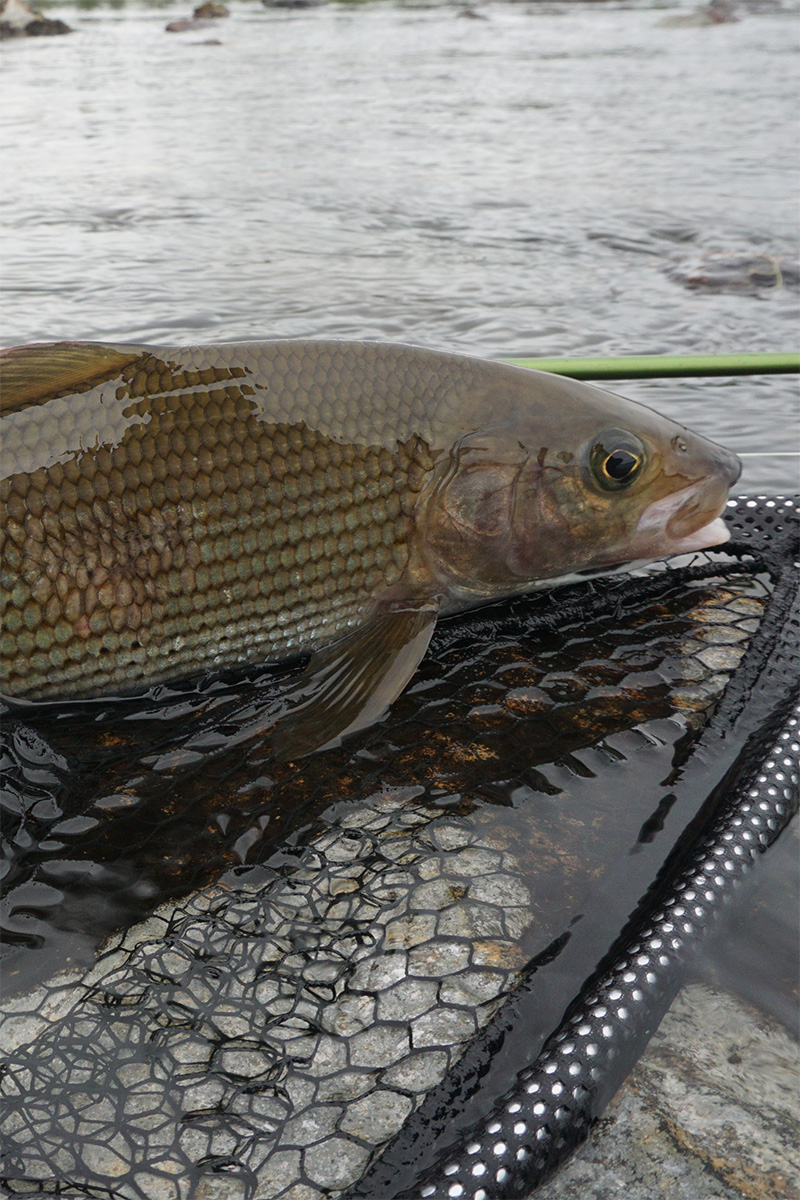
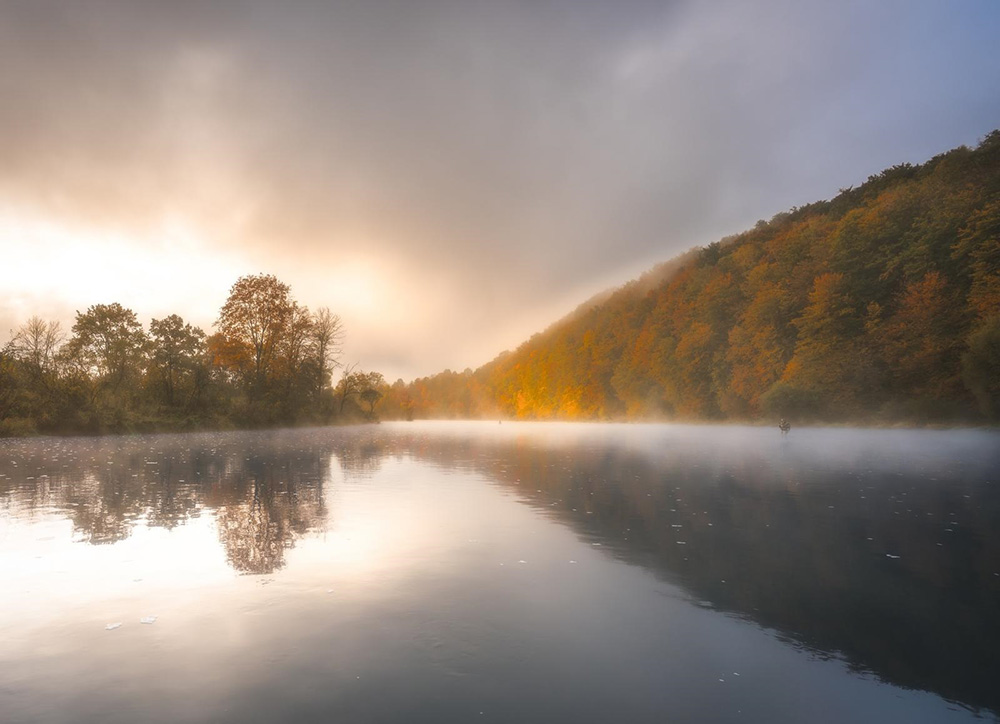
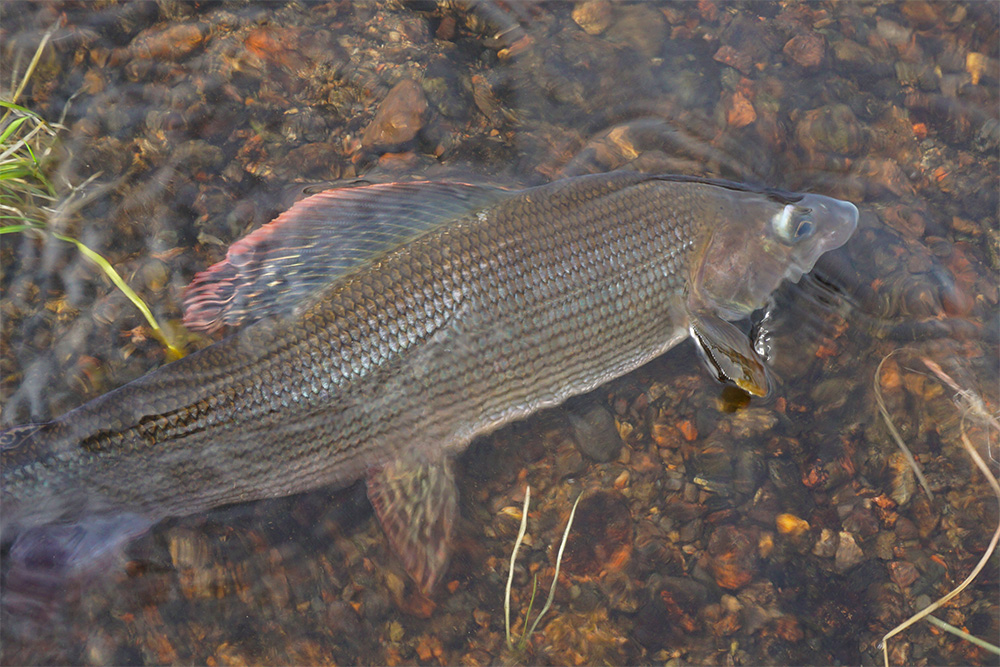
Autumn is the season when grayling feed intensely, preparing for the winter ahead.
You’ll find them in the slower, deeper sections of the river, swimming in gentle currents and waiting for the last small mayflies to hatch.
During this time, if you’re fishing on a beautiful autumn day, look for the middle of the day — when the sun slightly warms the water and the wind is calm.
That’s the perfect moment to fish with dry flies.
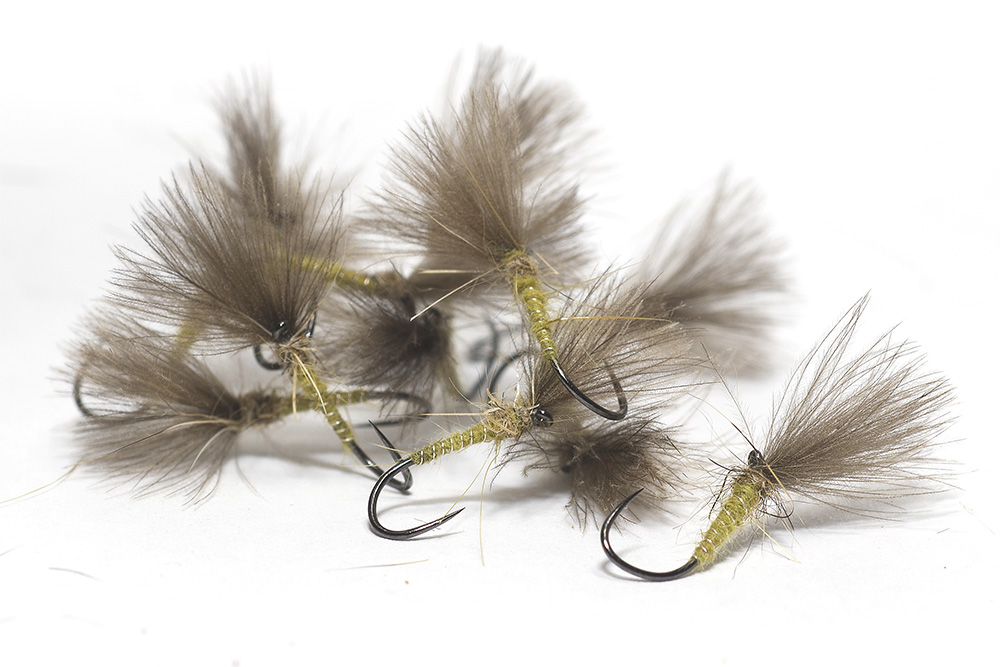
Among them, I recommend an emerger pattern that works incredibly well when small olive duns are floating on the surface, freshly hatched and vulnerable.
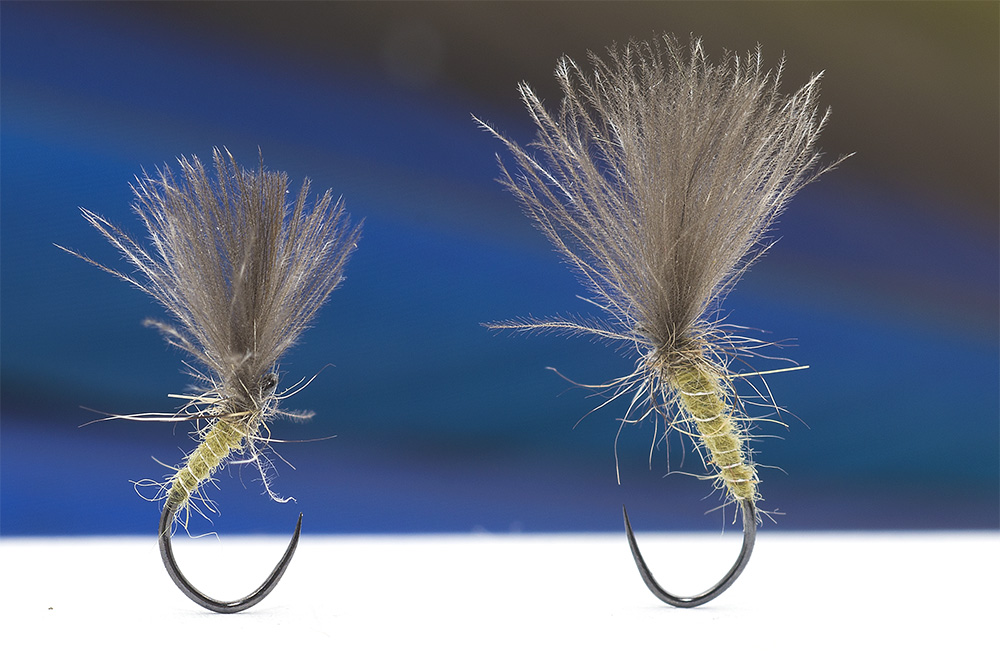
This emerger should be tied so that the body is slightly spiky — just as if the insect were molting and about to transform into its adult stage.
You can tie it on short or standard-shank hooks, depending on your preference, but I’ve found that short hooks work better for this type of fly.
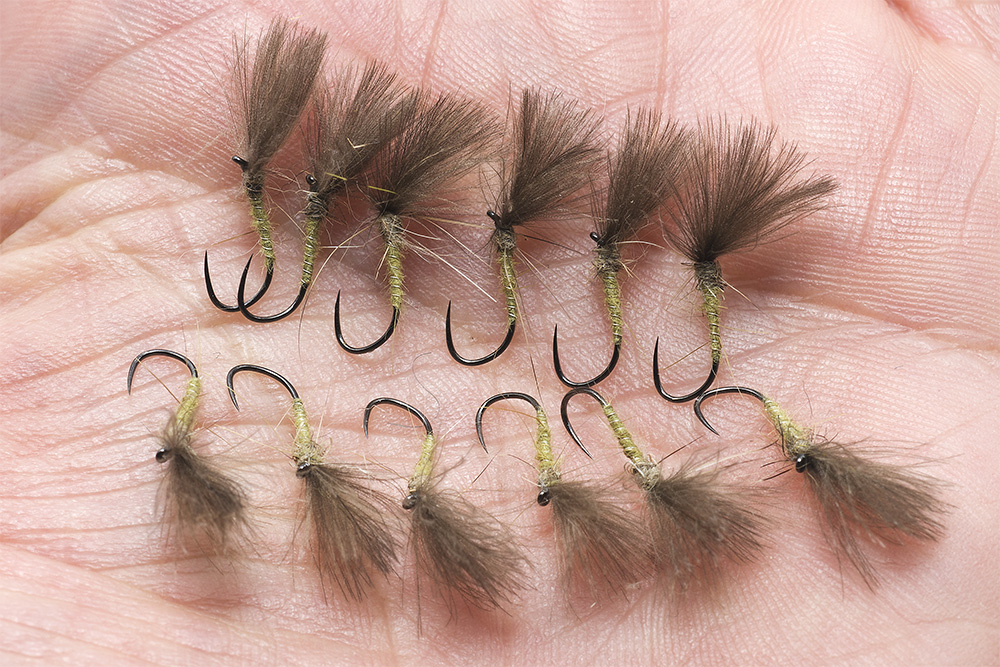
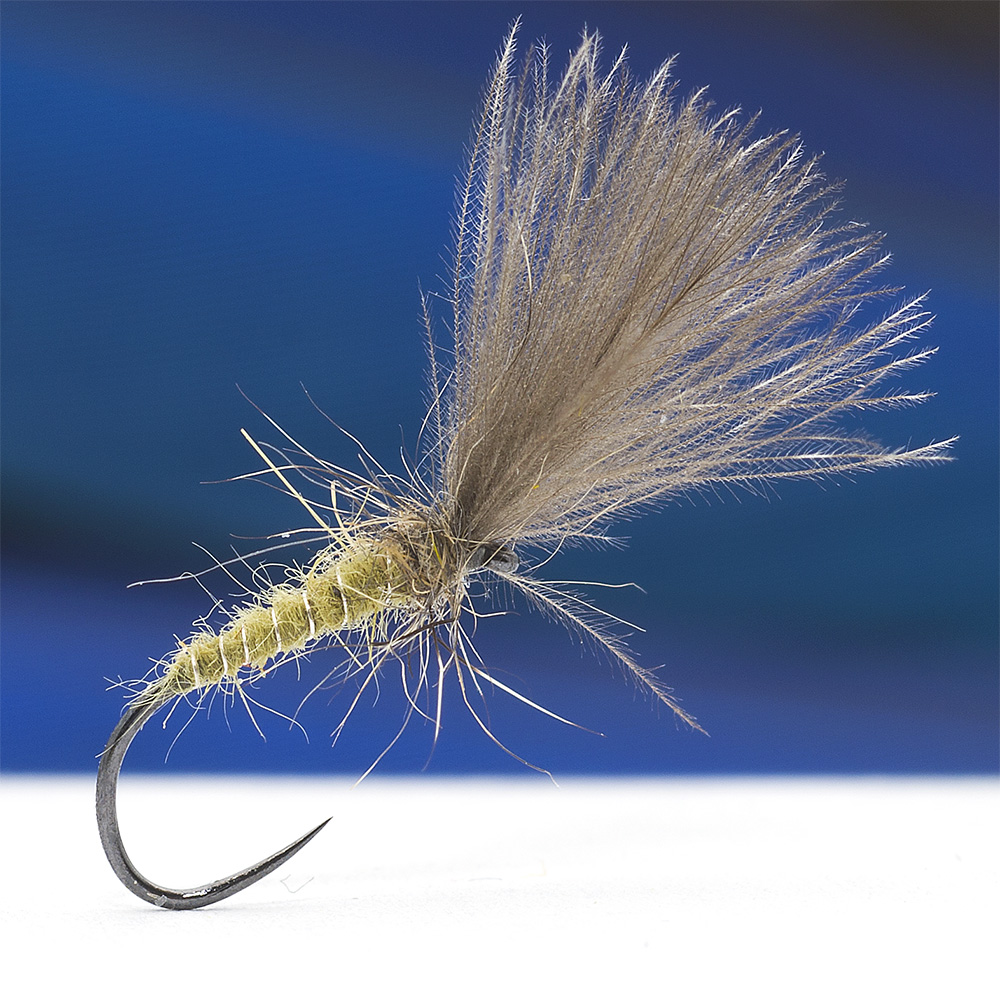
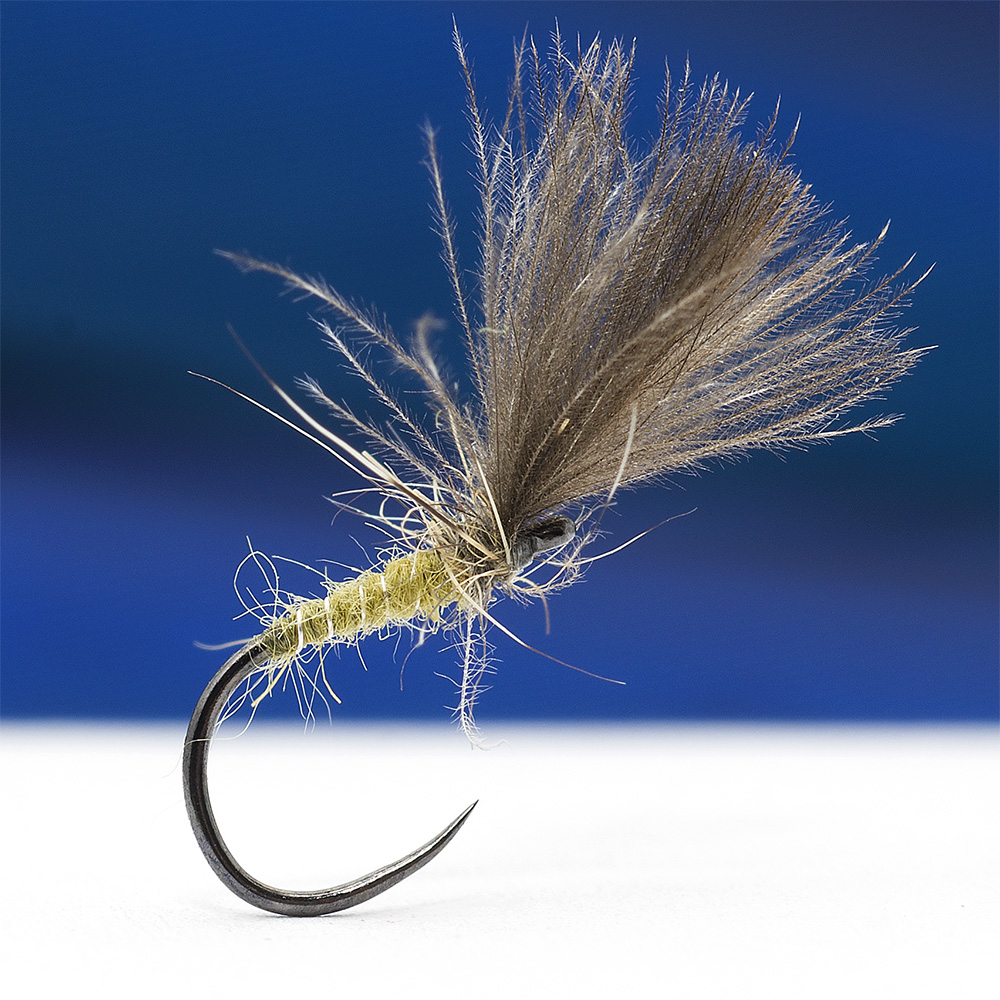
Materials used:
- Hook size #18 or #20 for slow running rivers and for fast running a size #16 will work fine. I used here the new Demmon D201 hook
- The thread used is 30 DEN Sumo Power Thread in white, chosen to avoid any colour interference with the dubbing. Many tiers who tie flies without actually fishing them tend to use black thread without considering how the fly will look once it gets wet. For this reason, my advice is to always use white thread, or a thread that matches the colour of the body material.
- Body: belgian dubbing in light olive or hare dubbing in light olive
- Ribbing: silver wire in 0.09mm to add body segmentation and a small contrast
- Thorax: Pure Squirrel Dubbing in natural pine or olive
- Wing is made with 2 or 3 CDC feathers from wild Mallard Ducks.
Tying tip: do not trim the CDC. Keep the CDC wing as long as the hook is ( bend and hook shank together)
December 25, 2025
HI….
Nice fly.
Can you do an material list ?
December 25, 2025
Hi Milton, done, thank you for pointing it 🙂 I forgot to add the recipe. By the way, should I put links to materials or is fine like it it now?
cheers and Happy Holidays!