
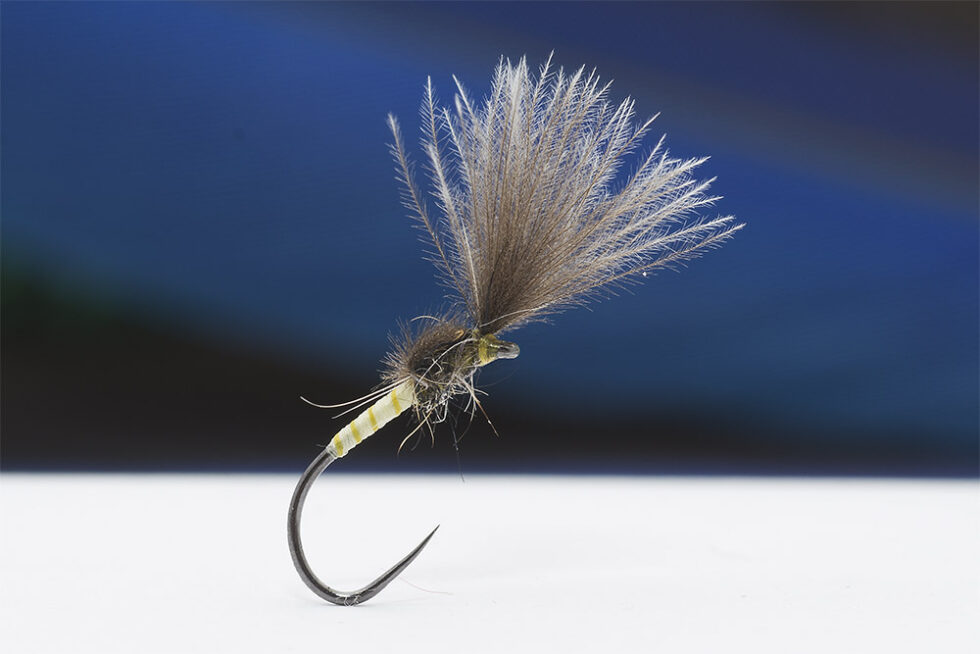
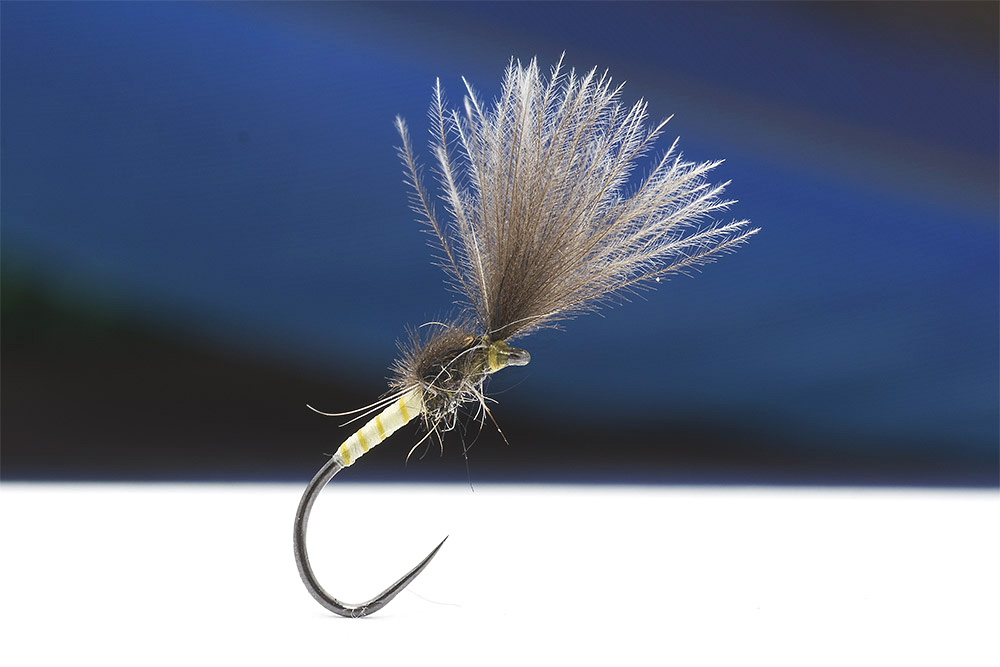
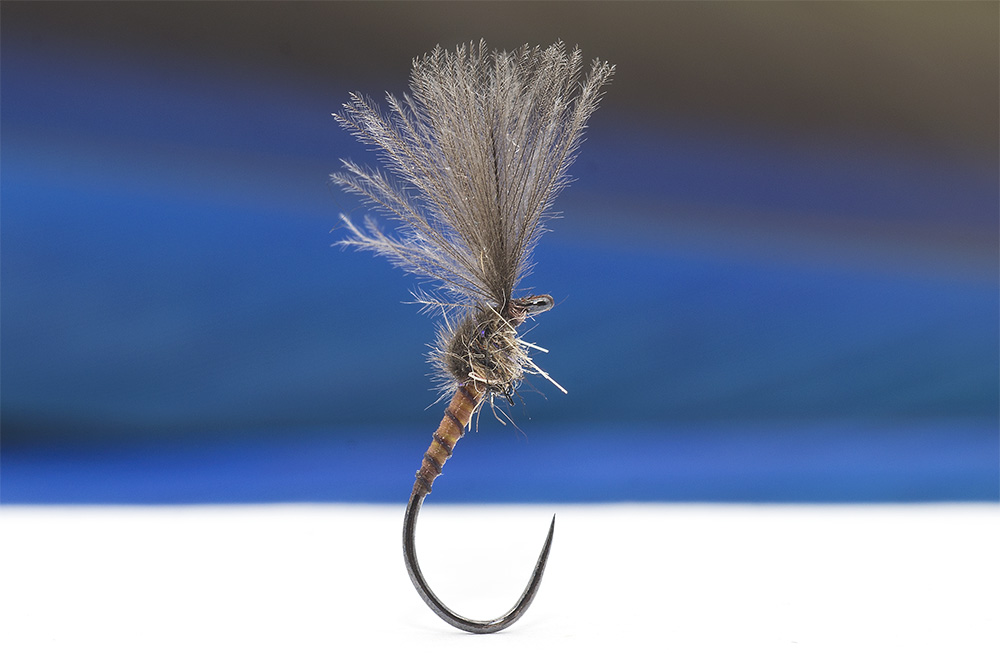
I have already presented a few emerger-style flies on the blog, and you can find them by browsing the older articles. Today I want to say a few words about one of the most effective CDC emerger styles: the CDC shuttlecock emerger.
These flies are simple, but this is exactly what makes them so useful. They do not require many materials, they are easy to tie, and when they are tied correctly, they can be extremely effective when trout are feeding in or just below the surface film.
The shuttlecock emerger is one of the most famous CDC emerger styles in modern fly fishing. One of the best-known early versions is the CDC shuttlecock buzzer, commonly credited to Sid Knight. It was originally created for stillwater fishing, especially for those moments when trout were taking emerging buzzers just in or under the surface film.
The idea later became popular in many river and stillwater variations. The principle is very simple: the CDC wing provides flotation, while the body hangs below or inside the surface film. This “above and below” position is what makes the shuttlecock style so effective. Trout often prefer insects that are trapped during emergence instead of fully hatched adults.
A good shuttlecock emerger should not float too high. If it sits like a classic dry fly, it loses part of its value. Ideally, the body should touch or slightly penetrate the water surface, while the CDC wing works like a small floating support. This low-floating position makes the fly very useful in slow water, flat pools, gentle currents, careful rises and situations with selective trout.
I tested this type of emerger many years ago in Poland, on the San River. More recently, I also used them in Slovenia, on the Idrijca. In both places, they confirmed the same thing: these are discreet flies, but they can be very effective when fish are feeding carefully in the surface film.
I recommend tying them on small hooks. For me, the ideal sizes are #18 and #20. They can also work in larger sizes, but their real value appears when trout are selective and refuse flies that are too large or too visible.
Tying tips:
- use good quality CDC with strong natural flotation;
- do not overload the wing;
- keep the body slim and delicate;
- avoid too much dubbing;
- let the fly sit low in the surface film, not high like a classic dry fly;
- sizes #18–20 are ideal for clear rivers and cautious trout.
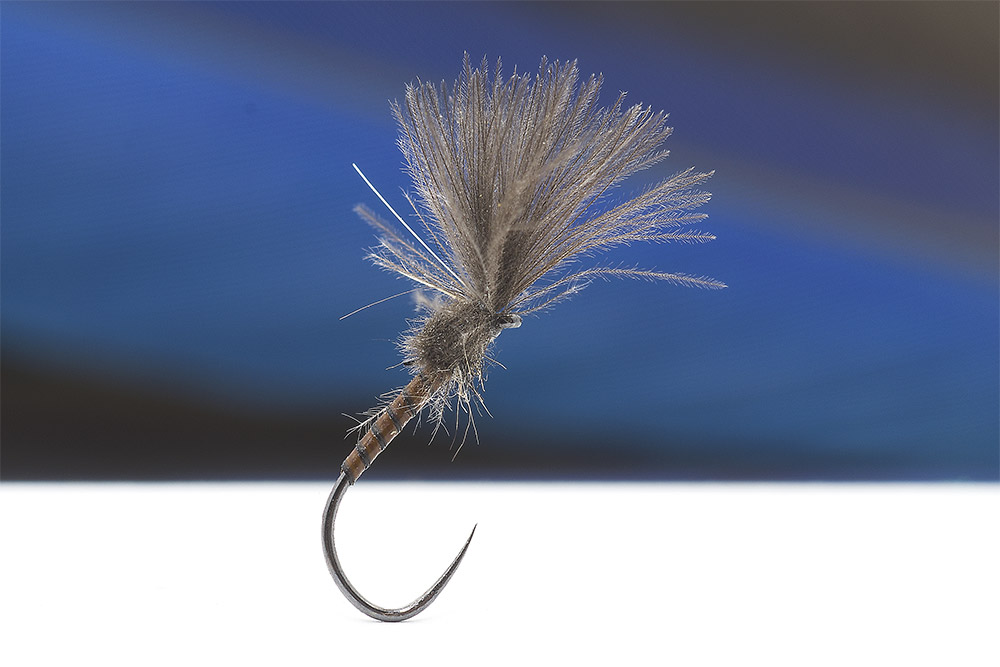
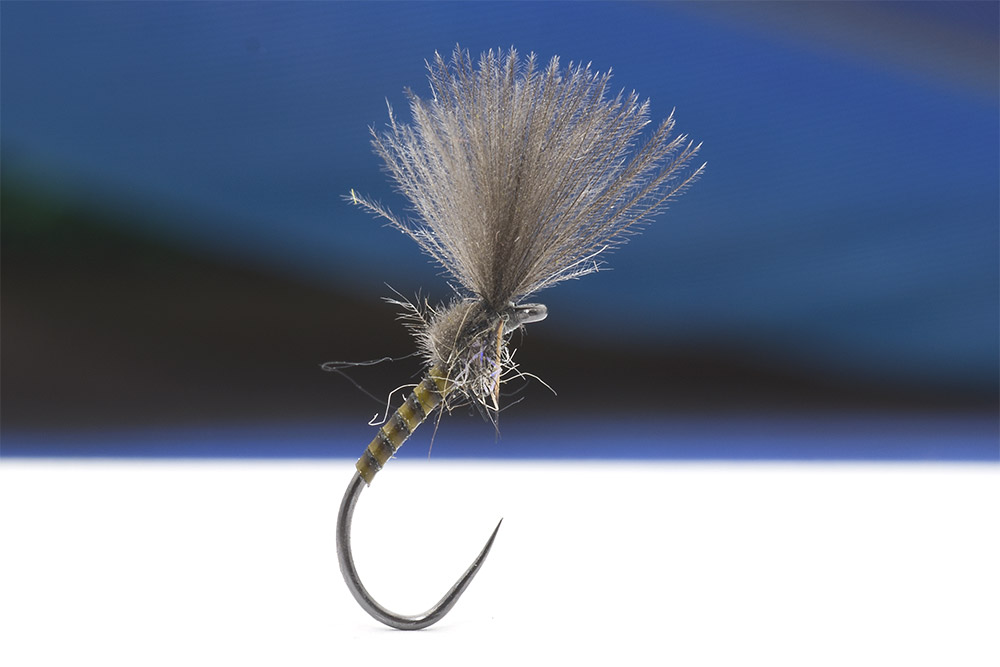
The body can be made from thread, biot, quill, fine dubbing or subtle synthetic materials. Classic colours such as olive, grey, brown, black and cream will cover most situations. The most important thing is to keep the profile slim and natural.
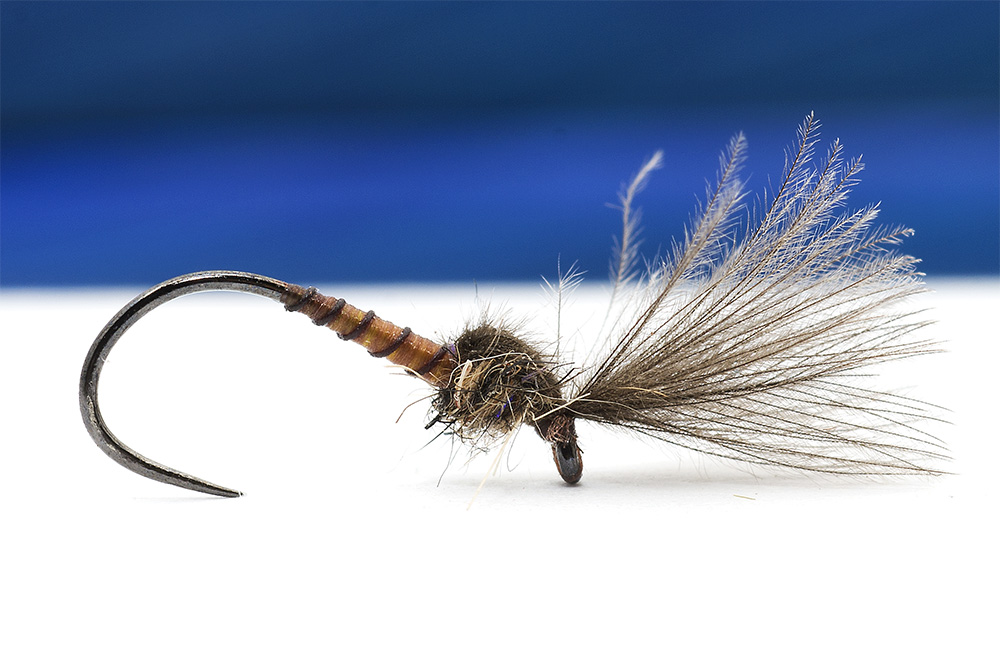
The CDC shuttlecock emerger is one of those flies that looks very simple in the vise, but can make a real difference on the water. When trout rise slowly, take small insects and refuse standard dry flies, a CDC emerger sitting correctly in the surface film can save the day.
June 16, 2026
When fishing with a CDC Shuttlecock Emerger, I frequently run into issues with unsatisfactory fly posture upon landing on the water. The hook fails to break through the surface film, leaving the fly lying flat on top of the water instead of sinking slightly as intended. I’m wondering if this problem is related to the type of knot I use to attach the fly. Would using a loop knot yield better performance for this pattern?
June 16, 2026
Hi, what emergers do you use? If the body is made with dubbing then avoid adding floatants. For ribbing use wire to help the fly to sink a little bit. Another option is to apply saliva on your fingers and “massage” the fly body,and the fly will sink right away.